
One Street
Dan Seljak and Sebastián López Cardozo
One Street_December 2025
Eleven Decades of Apartment Building
Dan Seljak and Sebastián López Cardozo
December 2025
Late in 2025, I invited Dan Seljak to walk Toronto’s Bathurst Street—one of the city’s main north-south thoroughfares extending from the shore of Lake Ontario to Holland Marsh. From that walk came eleven photographs of apartment buildings, one from each decade between 1910 and 2020.
Dan fits Jane Jacobs’ description of the pavement-pounding urbanist. He has walked practically every street in Old Toronto while advocating for the presence of retail on residential streets. Bathurst, however, resists any easy categorization. It is messy and inconsistent, reading at times like a city without zoning—Houston, perhaps, if colder. Just as the street begins to thin into something recognizably suburban, towers reappear, and density returns at Toronto’s northern edge.
The photographs are arranged by year of construction. Most were taken during the walk itself; a few were re-shot later, in warmer weather. Considered together, they sketch a loose chronology of how Toronto has housed itself over more than a century—without a single master plan, but not without pattern. My hope is that the images invite you to draw your own conclusions, or better yet, to walk Bathurst yourself. Credit is also due to Shawn Micallef, whose book Stroll first inspired me to take the street seriously as an urban document.
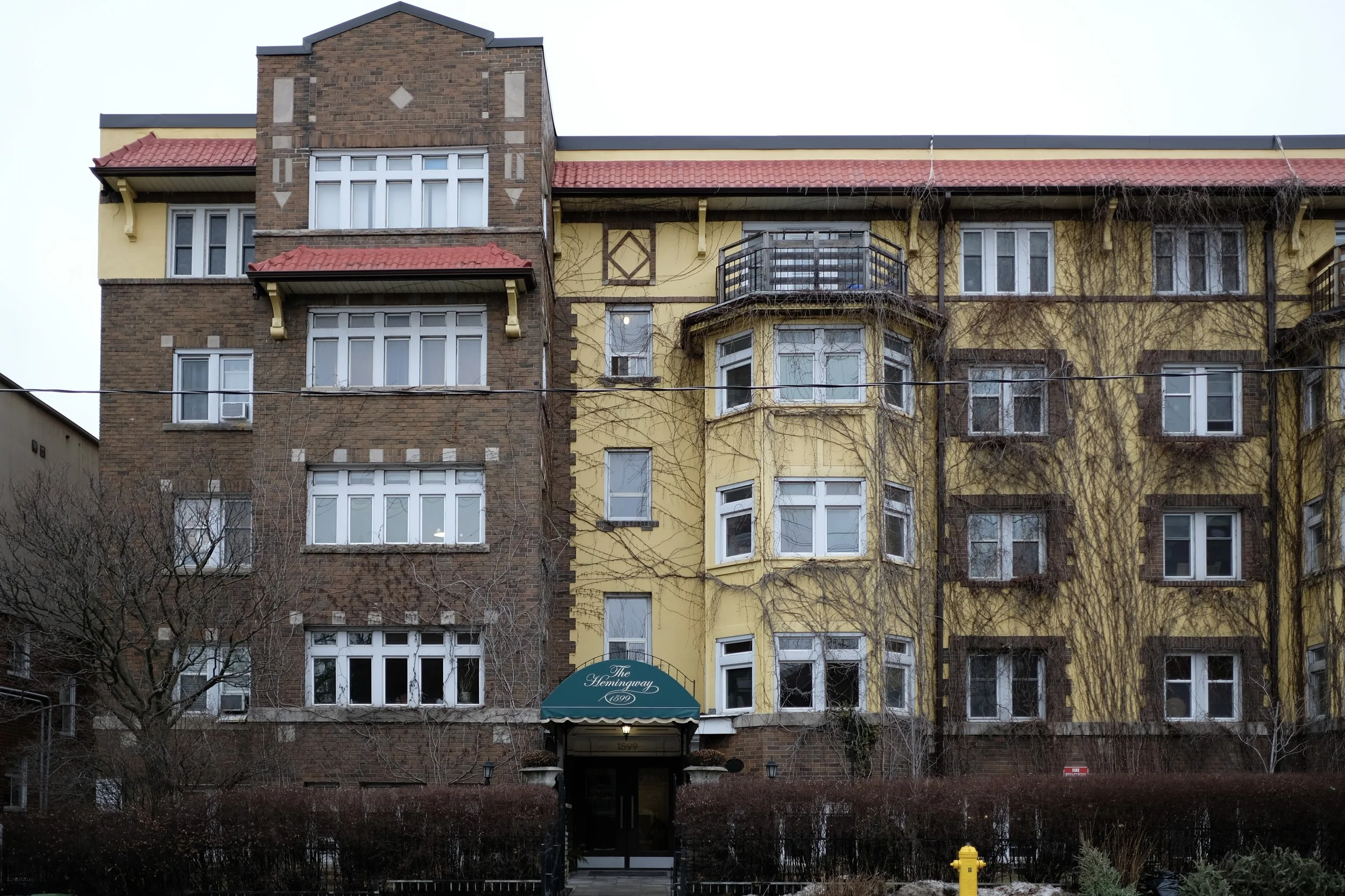
1597 Bathurst Street, built 1915. Photo by Sebastián López Cardozo.
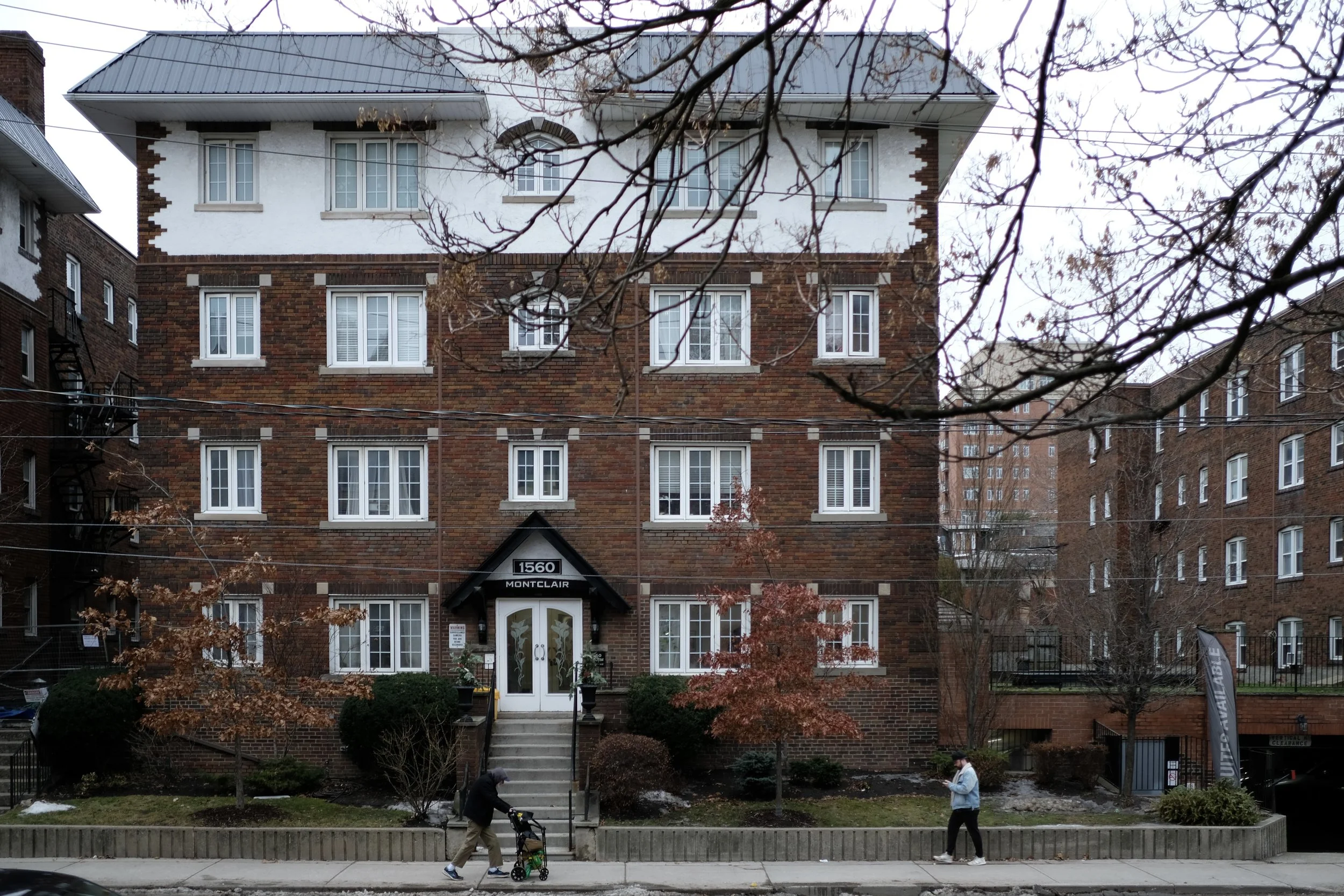
1560 Bathurst Street, built 1925. Photo by SLC.
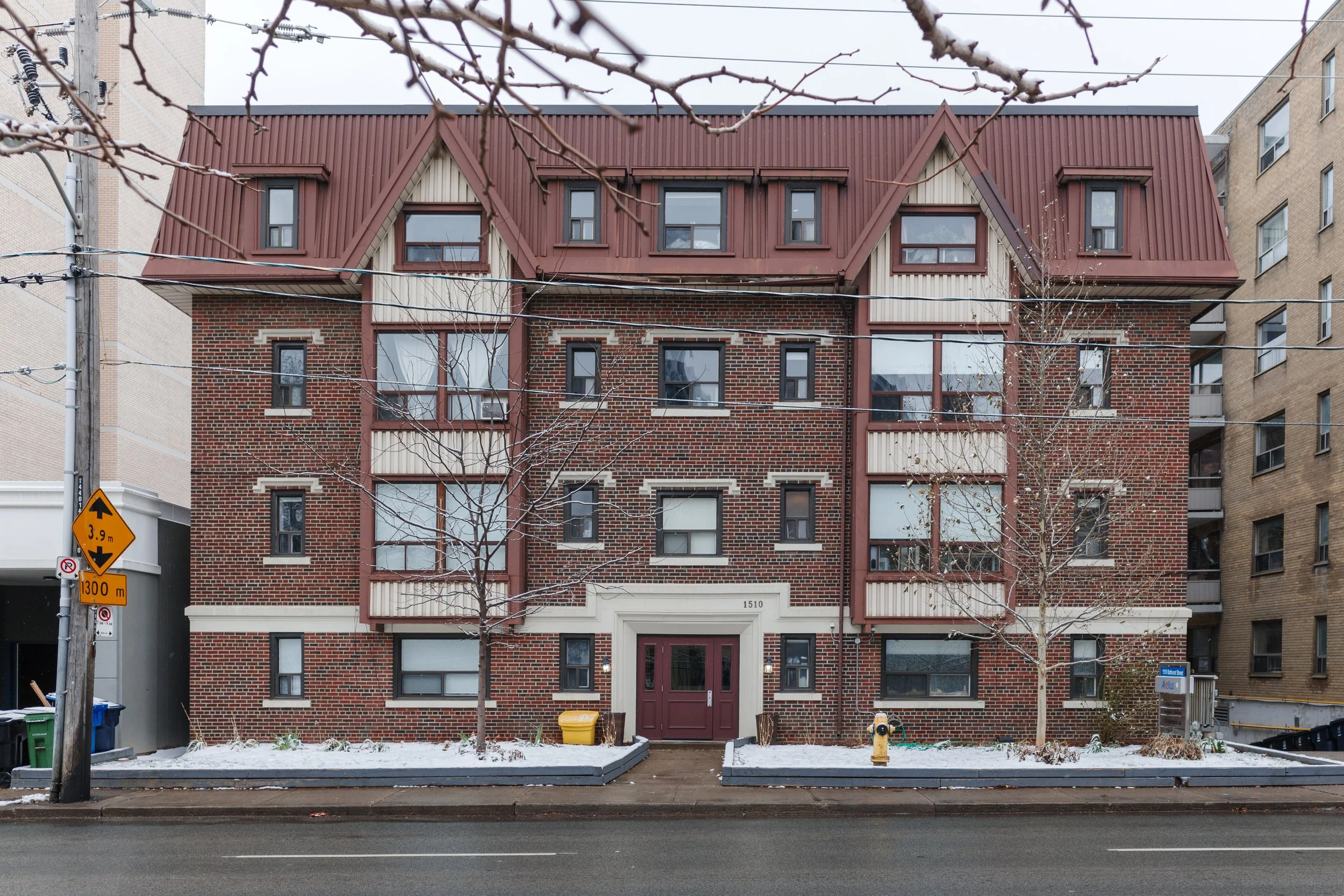
1510 Bathurst Street, built 1933. Photo by Dan Seljak.
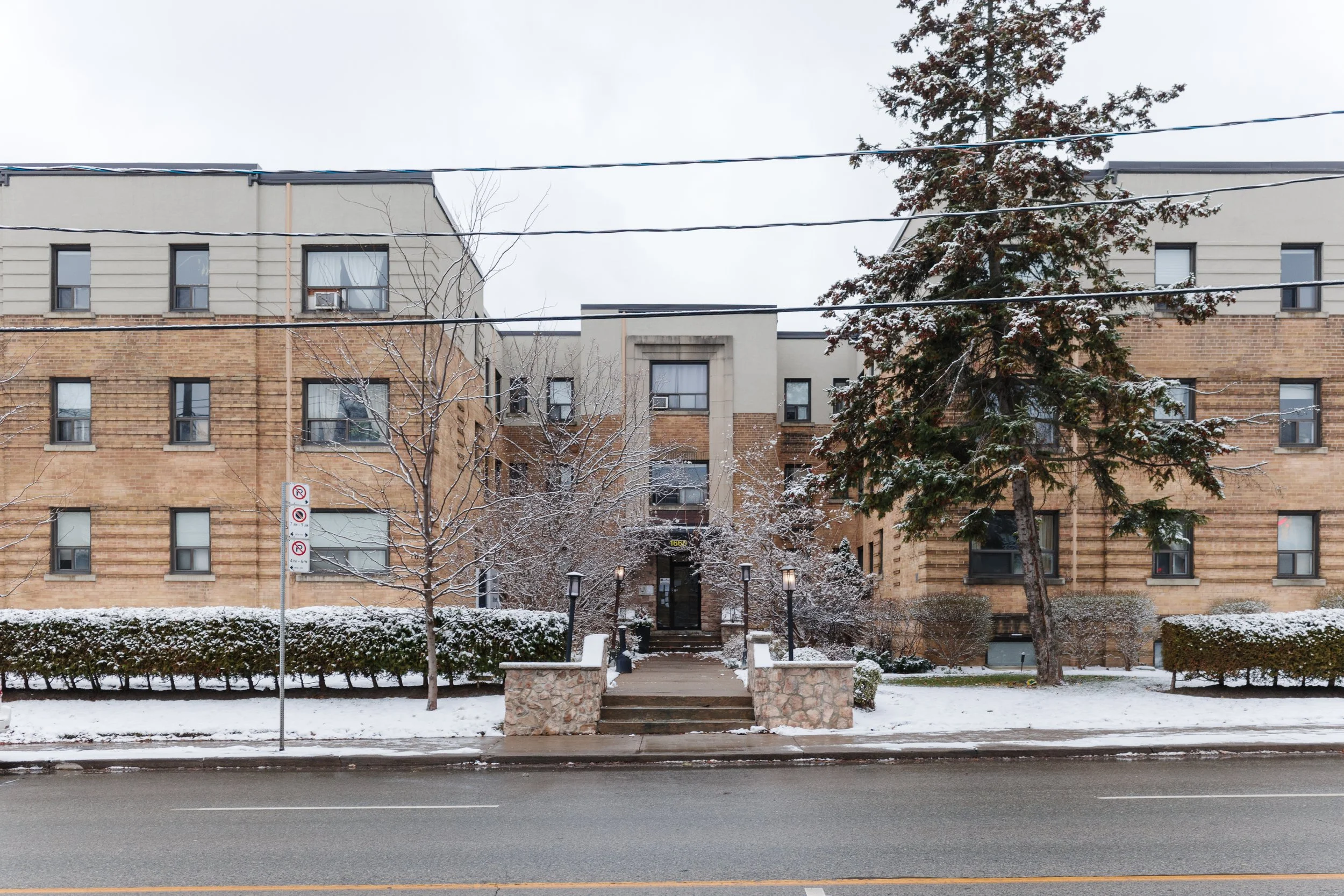
1660 Bathurst Street, built 1943. Photo by DS.
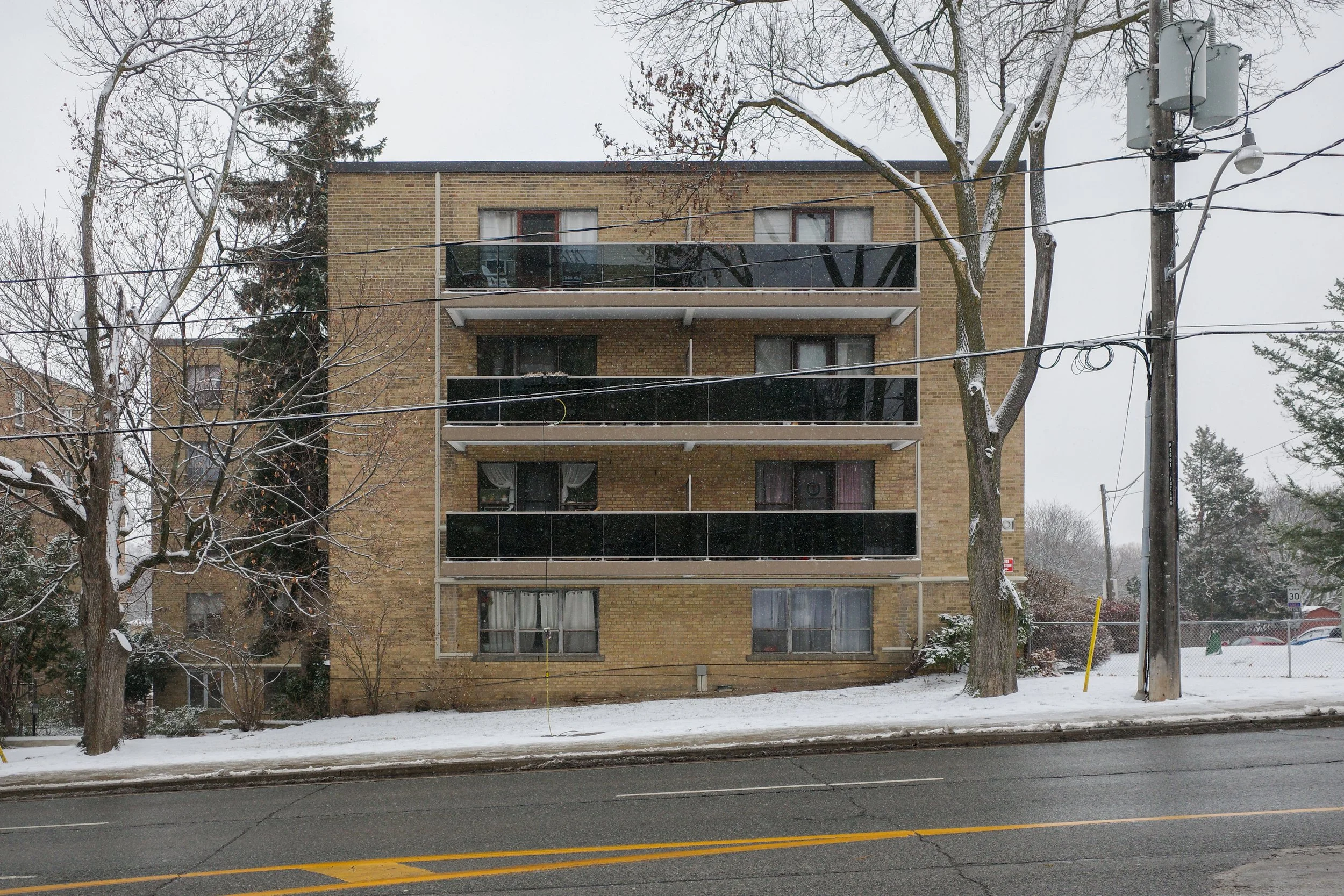
2601 Bathurst Street, built 1953. Photo by DS.
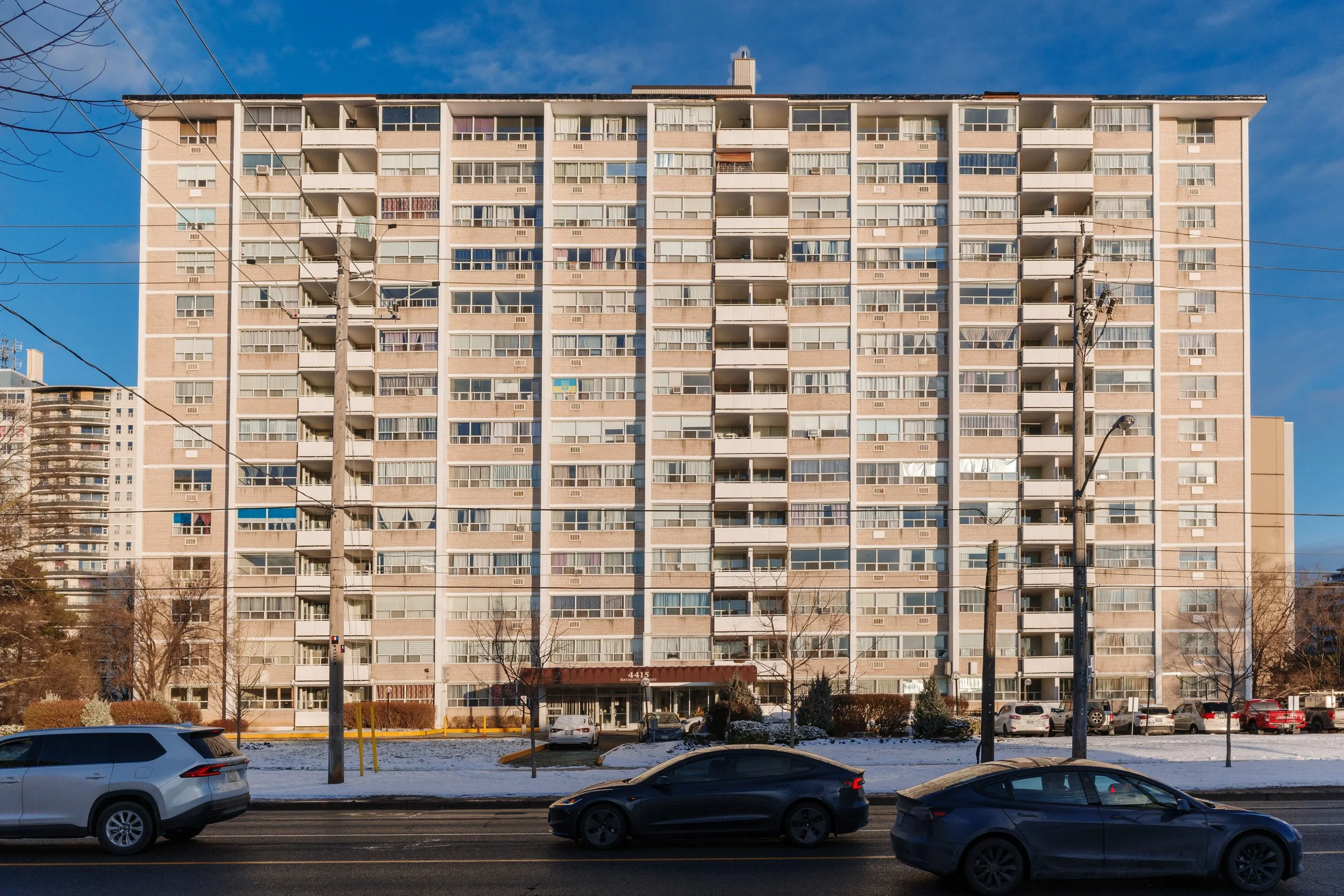
4415 Bathurst Street, built 1962. Photo by DS.
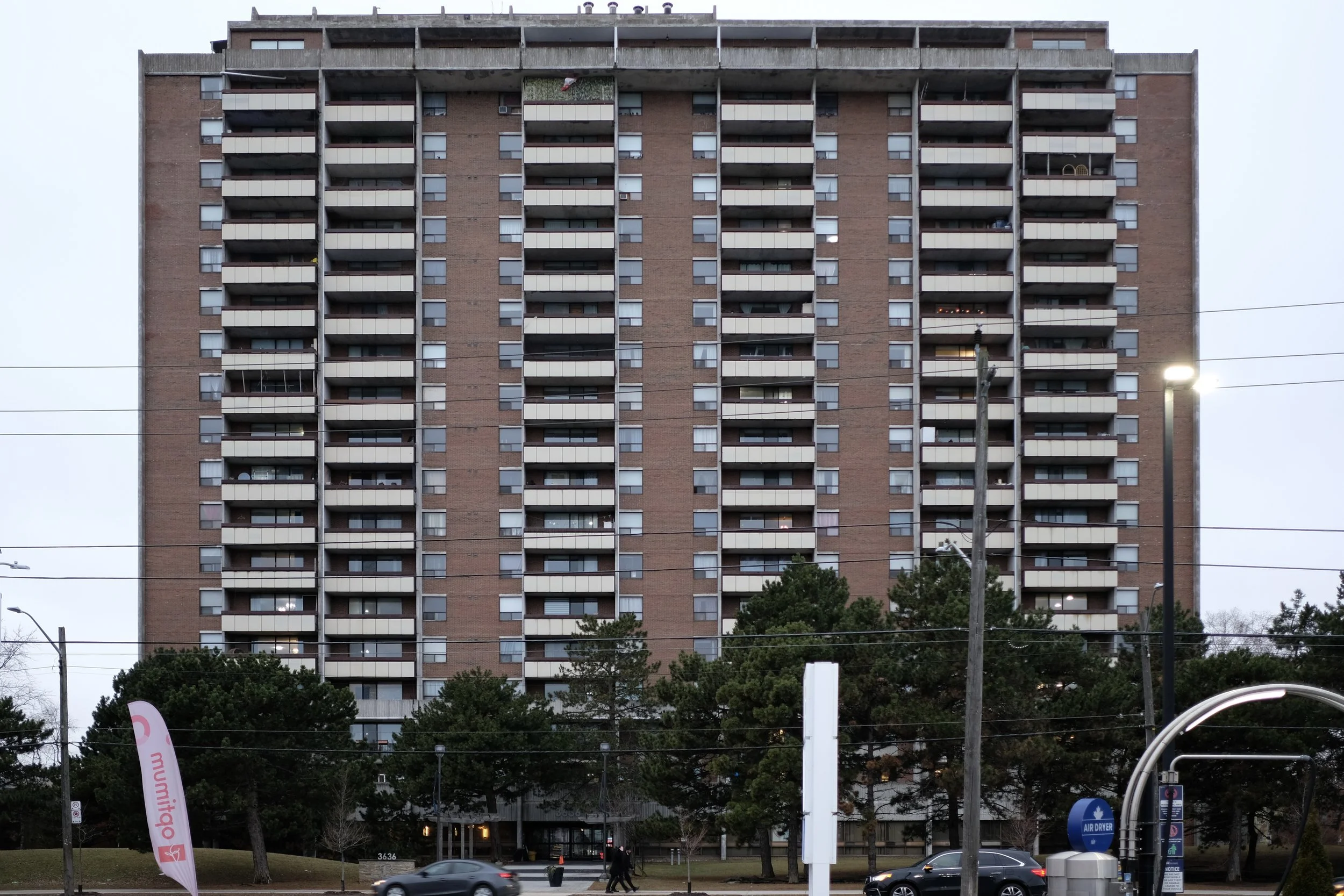
3636 Bathurst Street, built 1974. Photo by SLC.
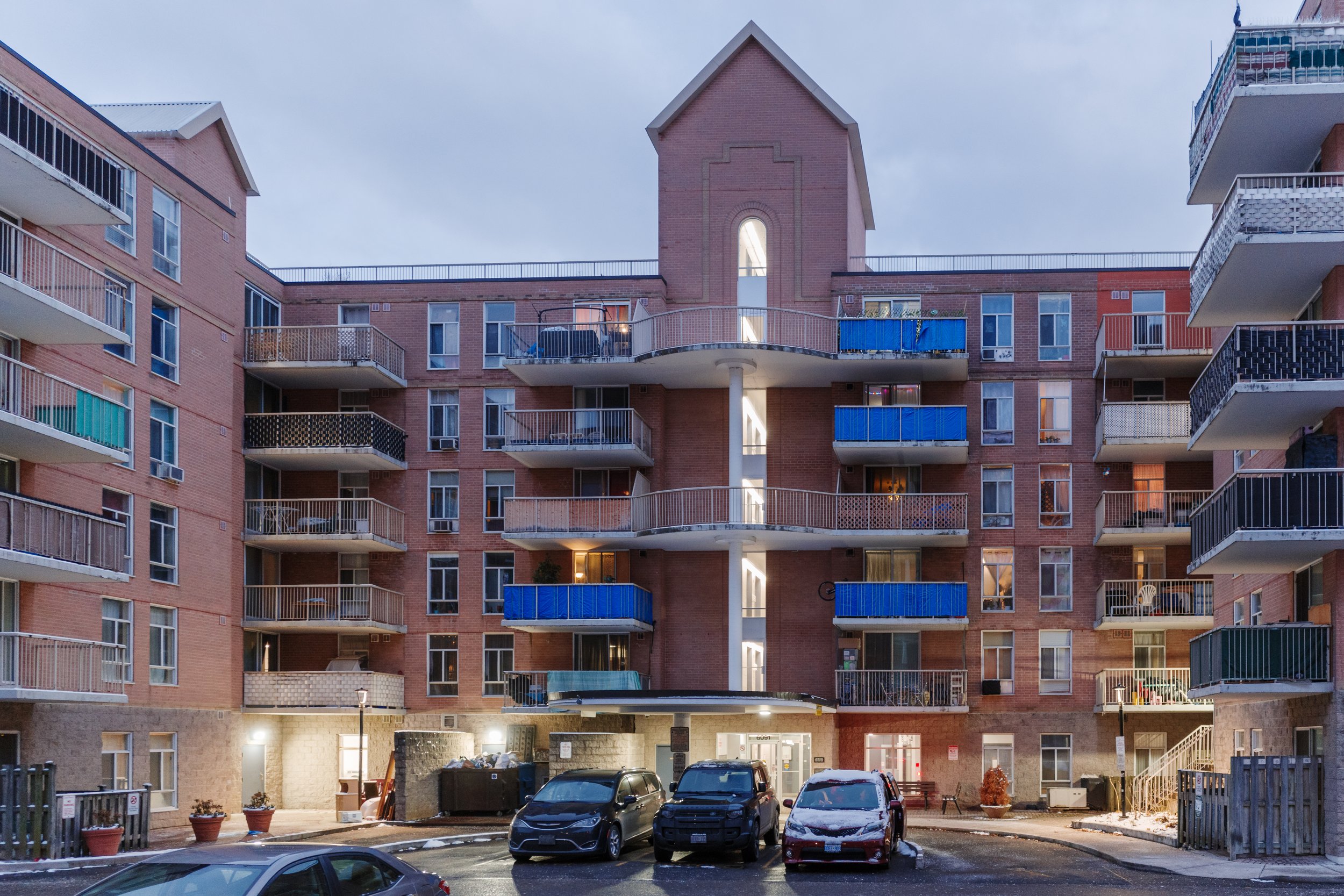
6091 Bathurst Street, built 1985. Photo by DS.
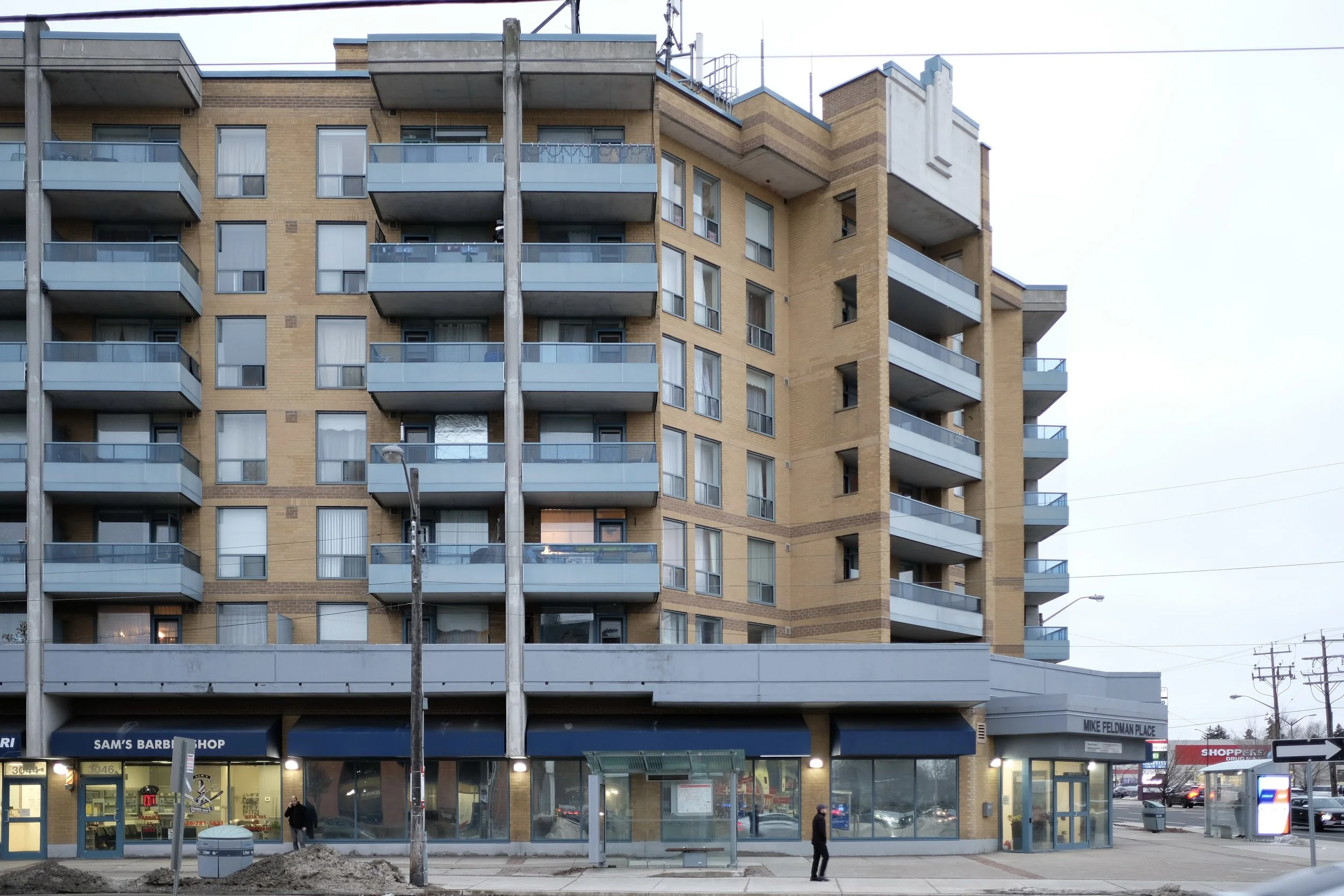
3036-3050 Bathurst Street, built 1992. Photo by SLC.
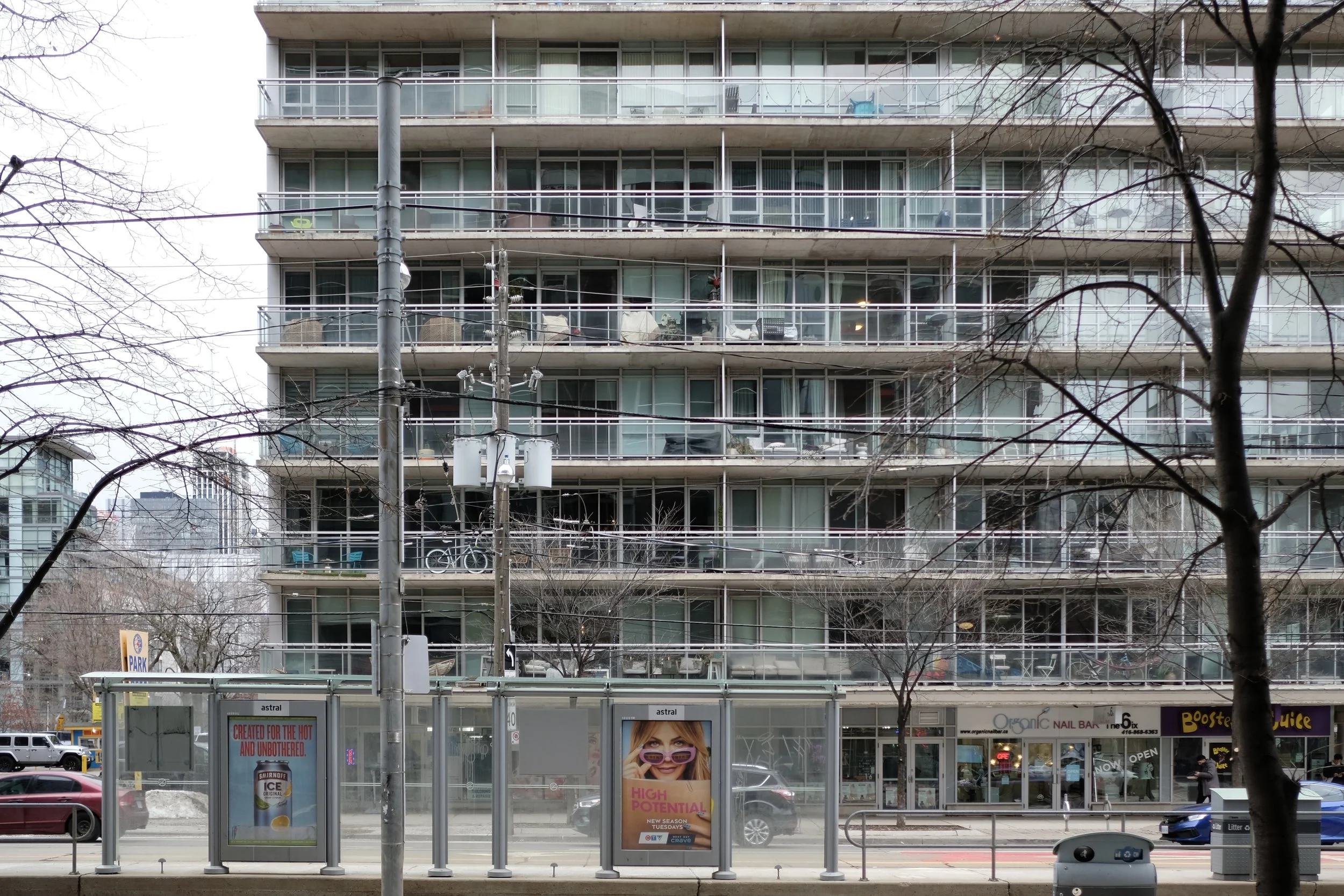
38 Niagara Street (facing Bathurst), built 2006. Photo by SLC.
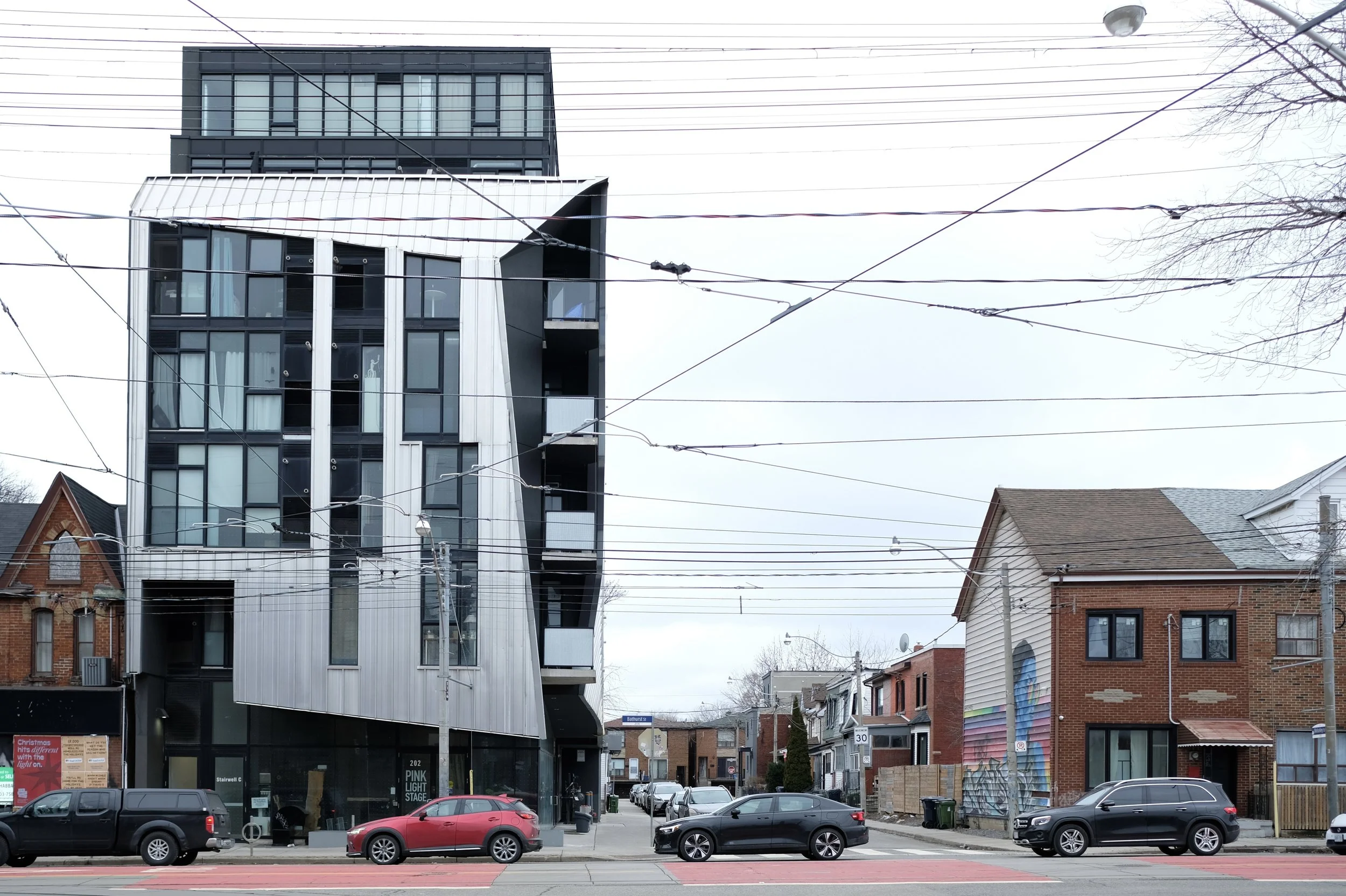
109 Wolseley Street (facing Bathurst), built 2017. Photo by SLC.
Dan Seljak is an urbanist, documentarian, and communications professional. When not working as a marketer for design firms, he runs Another Glass Box, a multimedia project promoting civic engagement and urban exploration.
Sebastián López Cardozo edits for Architecture Writing Workshop and works as an architectural designer in Toronto.
Parking Landscapes
Mai Okimoto
Parking Landscapes_April 2025
Microcosms of Houston
Pouya Khadem and Mai Okimoto
April 2025
Houston checks all the boxes of the American city: highways, strip malls, parking lots. But it takes driving—seeing its rawness firsthand—to begin to understand what draws people to a place that can seem, at first, so desolate. There’s a harshness to this landscape, its wet heat, endless asphalt, and, above all, its emptiness. It’s easy to imagine that most of the city’s seven million residents are in constant motion—and that the city itself exists within that motion, illuminated and transient.
But Houston is also this: the sun-baked signage lining the roadside; the low, stretched-out buildings they beckon toward, advertising a Washateria here, a bún suông place there, a nail salon, the check cashers. A simple turn off the road, a pause in the flow, reveals something more. Despite their shared vocabulary of unassuming forms, each cluster of buildings is a mikrokosmos of language, texture, and culture. In these spaces, the strip mall becomes not an afterthought, but something closer to a civic core. The photographs that follow are a modest record of this vast, overlooked terrain—a contribution to the many stories told about the American strip mall.

Southwest Freeway, Houston, TX. Photo by Mai Okimoto.

11550 Bellaire Boulevard, Houston, TX. Photo by Mai Okimoto.

6742 Hillcroft Avenue, Houston, TX. Photo by Mai Okimoto.

6742 Hillcroft Avenue, Houston, TX. Photo by Mai Okimoto.

6000 S Gessner Drive, Houston, TX. Photo by Mai Okimoto.

6000 S Gessner Drive, Houston, TX. Photo by Mai Okimoto.
Pouya Khadem edits for the Architecture Writing Workshop. He works as an architectural designer in Houston.
Mai Okimoto edits for the Architecture Writing Workshop. She works in Houston.
Empty
Leonid Furmansky
A Look at the Classroom_March 2023
Learning Space in the COVID Era
Leonid Furmansky
March 2023
Just as there is rarely a definitive, singular answer to the problems we address in our field, there is nothing straightforward or predictable about how and when we develop our architectural knowledge and skills. Learning could take place through our instructors’ sketches and conversations at reviews, or through study models and informal peer feedback exchanged over evening snacks. We often take for granted the classroom spaces where these personal interactions take place.
Architecture schools catalog the chaotic detritus of studio learning: tables covered with scrap material and orphaned model parts, walls of red-lined pin-ups, the burnt smell from laser cutters—alongside pristine final models and drawings from previous semesters. The COVID-19 pandemic turned studio culture on its head, as institutions scrambled to adjust to a new reality of social distancing and virtual learning.
During the Fall semester of 2020, at the height of the pandemic, photographer Leonid Furmansky passed through the University of Houston Gerald D. Hines College of Architecture and Design (by John Burgee and Philip Johnson, 1982), a building that sees nearly 1,000 students today. He captured the unimaginable: a pristine and empty architecture school.

The University of Houston Gerald D. Hines College of Architecture and Design. Photo by Leonid Furmansky.

The University of Houston Gerald D. Hines College of Architecture and Design.
Photo by Leonid Furmansky.

The University of Houston Gerald D. Hines College of Architecture and Design. Photo by Leonid Furmansky.

The University of Houston Gerald D. Hines College of Architecture and Design. Photo by Leonid Furmansky.

The University of Houston Gerald D. Hines College of Architecture and Design. Photo by Leonid Furmansky.