CLT and Apartments
with Jesús Vassallo and Pouya Khadem
December 2025
How do building technologies shape the way we live together? From early modern apartments like Stuyvesant (1870) and the Dakota (1884), to the global spread of prefabricated concrete housing after World War II, construction methods have been closely intertwined with the evolution of collective living. Cross-Laminated Timber (CLT) belongs to this lineage.
In this discussion, Jesús Vassallo reflects with Pouya Khadem on CLT’s history, challenges, and potential to reshape apartment construction toward more resilient and adaptable futures.
Pouya Khadem (PK): When and how did Cross-Laminated Timber, or CLT, emerge as a construction system—and what forces shaped its early development?
Jesús Vassallo (JV): If you think about the geographic origins of CLT, we’re really talking about Bavaria and Austria—central Europe. On one hand, there was a surplus of young trees that needed to be harvested to maintain healthy production forests. But I don’t think it’s far-fetched to imagine another motivation: that using this surplus to create laminated timber panels was also a way to transform the existing prefabricated housing paradigm.
Prefabrication in that region was dominated by reinforced-concrete panel systems—a construction methodology developed in and exported by the Soviet Union. The USSR helped build factories for that system across Cuba, Chile, and especially Eastern Europe, where it became highly advanced. It functioned not only as a technical export, but as a cultural one; during the Cold War, you could often identify Soviet-influenced countries simply by their reinforced-concrete housing blocks.
The idea that you could laminate small wood members into large structural panels—panels with the same dimensions and applications as those concrete ones—created an opportunity to reinterpret that foreign technology using local materials and traditions. I suspect that the desire to localize and materially differentiate prefabrication played a role in the emergence of mass timber.
At that time, there was a stigma attached to that kind of prefabricated concrete housing. It’s different from, but not unrelated to, the stigma that developed in the U.S. around mid-century public housing projects—large, standardized apartment complexes often associated with economic decline. By the 1990s, as the USSR was coming to an end, this very economically efficient form of prefabricated housing already had a bad reputation, even in the countries that had embraced it.
PK: It’s fascinating to think of the emergence of CLT in relation to this particular history of prefabricated housing.
JV: I’ve always understood the rise of mass timber within that context—though I admit I’m speculating. But it has always seemed plausible to me that this helped shape the direction of innovation. After all, why develop that particular use of surplus wood? There were many other possibilities. Today, in much of Europe, CLT has become thoroughly mainstream. In Spain, for example, many of the best public housing projects of the last five years use mass timber or CLT.
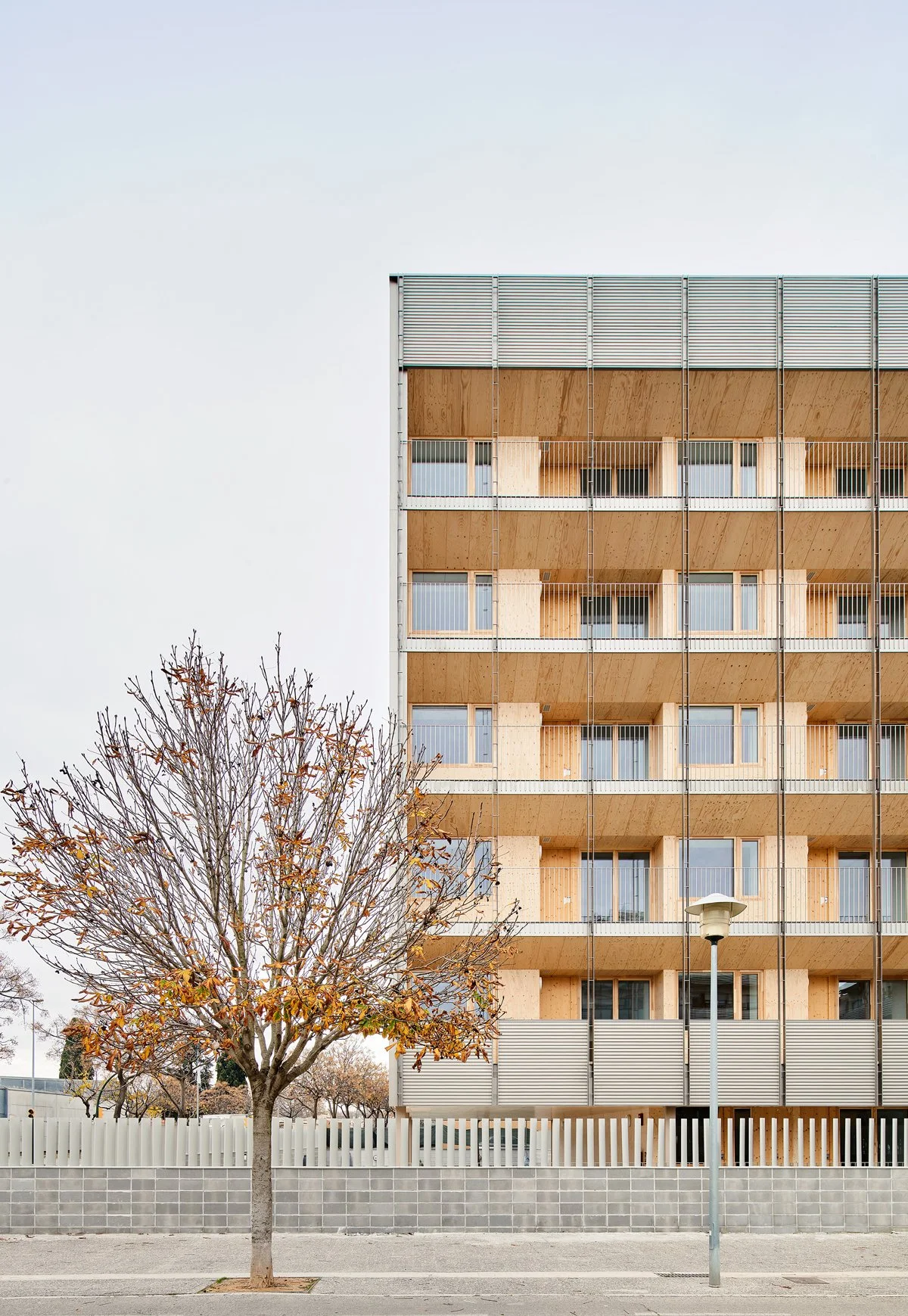
6X6 Block, 35 apartments in Girona, Spain (2016-2020) by BOSCH.CAPDEFERRO, Girona, Spain. Courtesy of BOSCH.CAPDEFERRO. Photo by José Hevia.
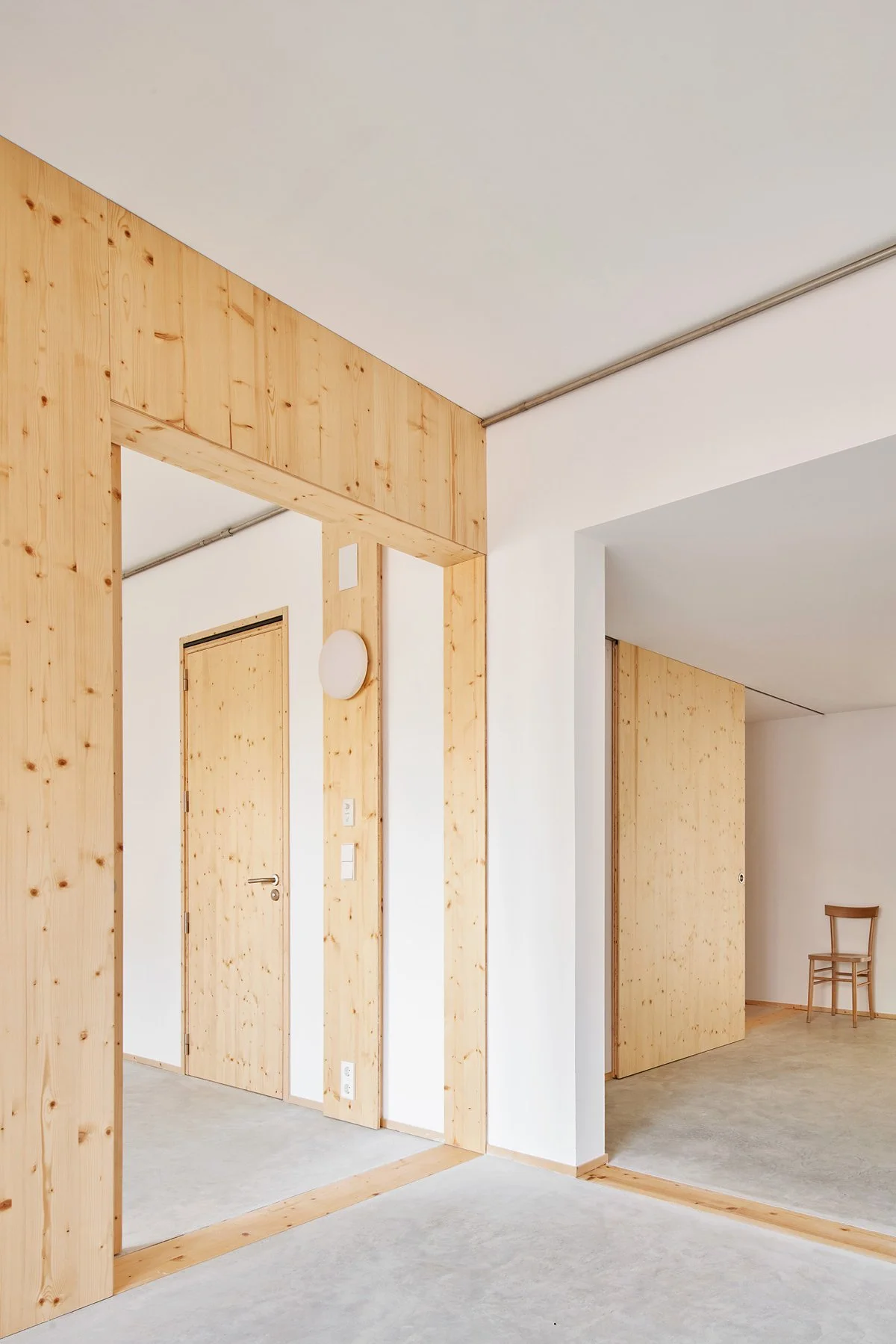
6X6 Block, 35 apartments in Girona, Spain (2016-2020) by BOSCH.CAPDEFERRO, Girona, Spain. Courtesy of BOSCH.CAPDEFERRO. Photo by José Hevia.
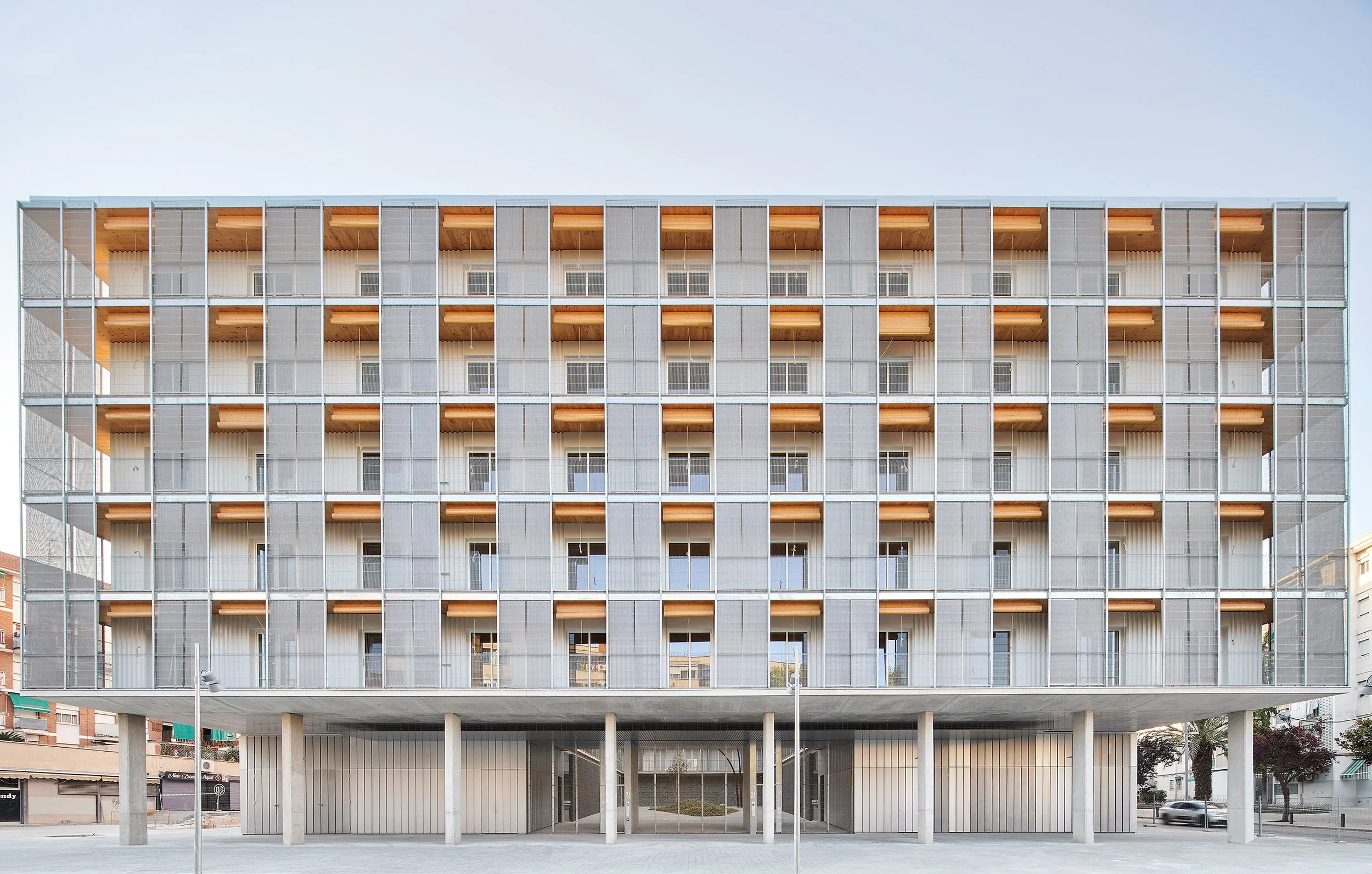
Modulus Matrix, 85 social housing in Cornellà, Spain (2020) by Peris + Toral Architecture. Spain. Courtesy of Peris + Toral. Photo by José Hevia.
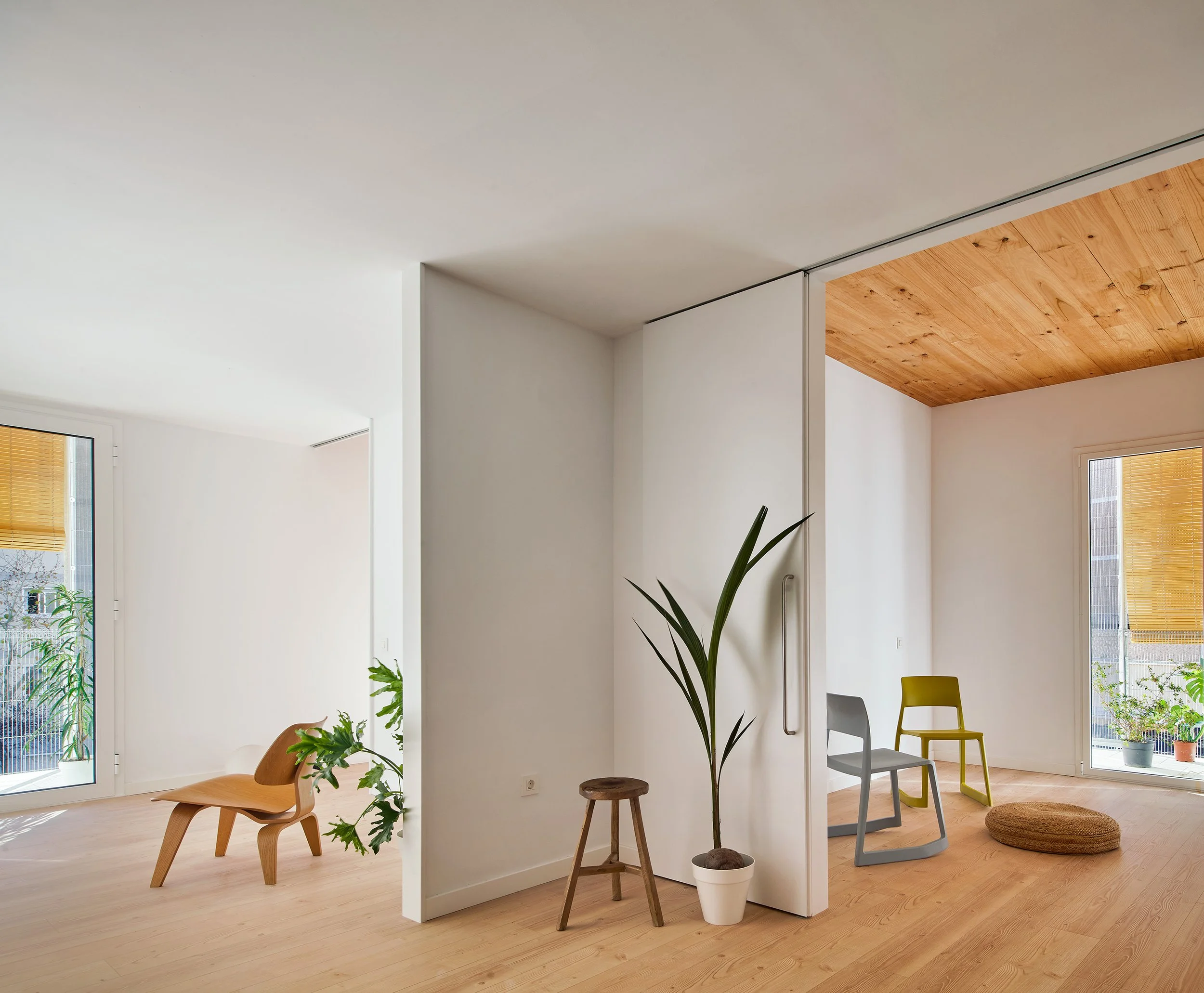
Modulus Matrix, 85 social housing in Cornellà, Spain (2020) by Peris + Toral Architecture. Spain. Courtesy of Peris + Toral. Photo by José Hevia.
PK: So why hasn’t CLT become more widespread in American apartment construction? Most of the mass-timber projects we see in the U.S. are institutional or cultural buildings, not housing.
JV: In the U.S., the primary issue is cost. As you know, in real-estate development the bottom line is king. Mass timber is a very high-quality construction system, but it isn’t always competitive in terms of upfront cost. If you look strictly at first costs, concrete is almost always cheaper—in Europe and in most of the world. You only arrive at mass timber as the more rational option once you factor in long-term environmental costs.
There’s another barrier unique to the U.S., and that’s the building culture itself. The great urban fires—the Chicago Fire, and the fires in San Francisco after the earthquakes—had an enormous influence. Those cities were built largely from the original old-growth forests of the continent; they used massive timber members for their largest buildings. Those are the buildings that burned, and the association stuck: timber construction was seen as dangerously fire-prone.
That perception became embedded in the building code. Mass timber was categorized very early in the International Building Code (which is really the U.S. code, despite the name), and the requirements for that category were developed when construction still relied on old-growth, full-section timbers. Because of the fire history, that category was heavily penalized.
This is a big part of why the U.S. is behind in adopting mass timber. It has taken enormous effort to overcome that deeply ingrained fear of fire and to demonstrate—through testing—that modern mass timber is extremely safe. In fact, because its behavior in fire conditions is so predictable, it often performs more reliably than steel or concrete, both of which can behave unpredictably and fail catastrophically.
PK: What inherent qualities make CLT particularly suitable for apartment buildings?
JV: Across Europe, you see a renewed acceptance of the cellular housing plan, of the idea that apartments are just collections of rooms of square or rectangular proportions, a notion that was dominant since antiquity, but was brought to a crisis by modern architecture’s insistence on the open plan. Interestingly, when you overlay that cellular logic with CLT as a construction system, and how it wants to behave structurally, the alignment is almost perfect. Over the last decade, there have been so many projects that it’s practically becoming part of the contemporary housing canon.
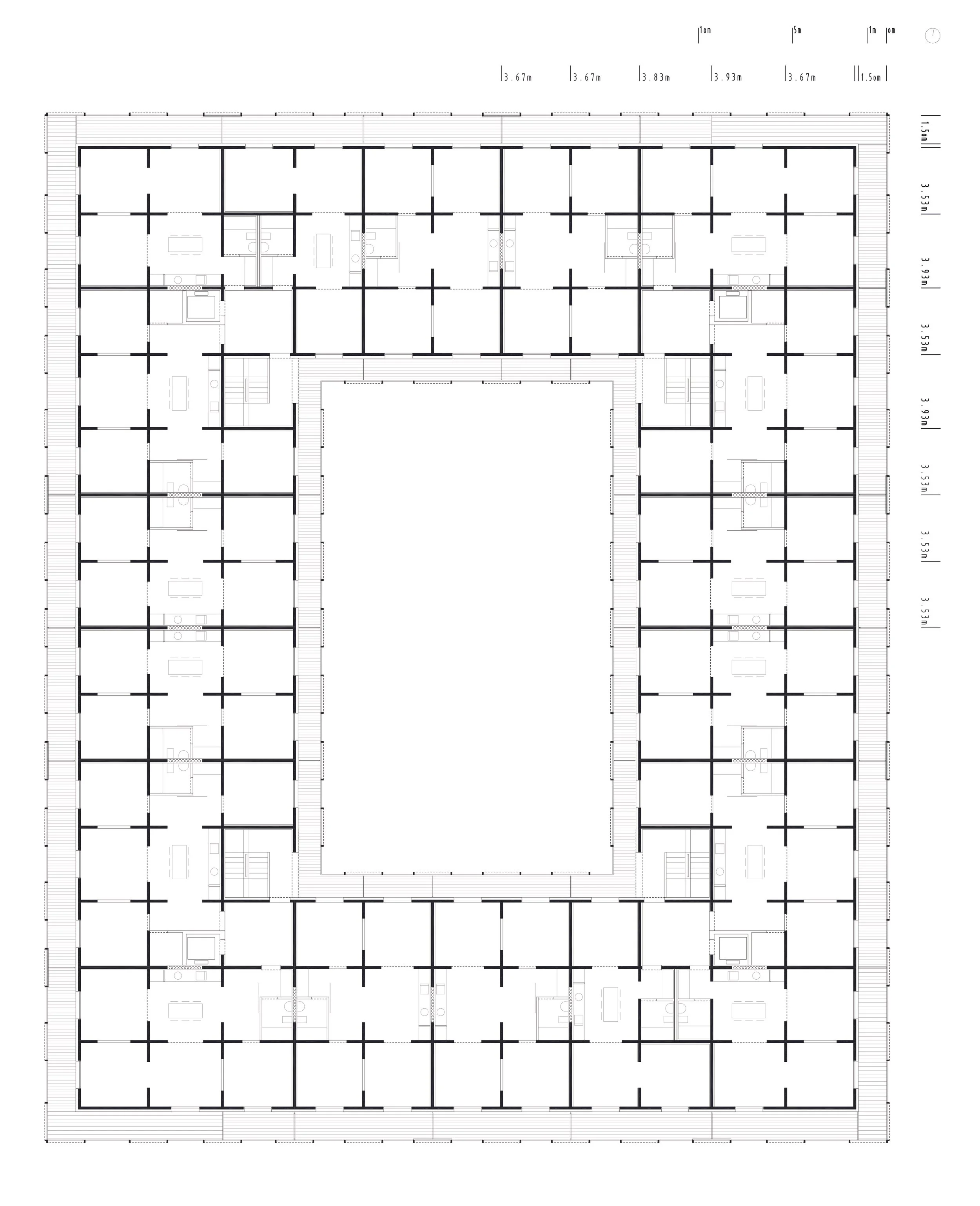
Modulus Matrix, 85 social housing in Cornellà, Spain (2020) by Peris + Toral Architecture. Spain. Courtesy of Peris + Toral.
In the U.S., though, CLT struggles to compete with the “4-over-1” system—one level of parking with four stories of light wood-frame construction above. It’s extremely economical, and it has become deeply embedded in the industry: insurance companies, banks, developers, investment groups—everyone is comfortable with it. That familiarity leaves very little oxygen for experimentation. As long as the 4-over-1 model works—and it does—it’s difficult for anything else to take its place.
PK: Where do you see opportunities for CLT in this established market?
JV: I think the real space for mass timber is where you need densities higher than what the 4-over-1 system can achieve. There’s an intermediate band between that and the 25–30-story condo tower—a tallish mid-rise. Once you reach the height limit of the 4-over-1, you have to switch to metal framing, and that gray zone is where CLT is poised to break through.
In places like Houston, it’s harder, because developers can still rely on those two existing products—the standard mid-rise and the mixed-use concrete tower—and there’s plenty of land. In denser, more competitive markets, where upzoning and differentiation matter, you’ll see innovation first. Cities like New York, Chicago, and San Francisco will probably lead the way.
PK: Can we expect to see more CLT housing projects in the U.S.?
JV: Absolutely. There are now hundreds of mass-timber projects being implemented every year in the U.S. That increase in volume is important: it allows manufacturers to expand capacity and reach a new level of predictability in their production.
In the past, much of the material had to be shipped from Canada or Europe. Now, we have factories in the U.S. precisely because construction demand has grown. Once this new generation of plants fully matures and can reliably produce at scale, that predictability will be transformative for CLT apartment buildings.
PK: CLT housing projects—like Ascent (2022) in Milwaukee, U.S., and Murray Grove (2009) in London—have helped establish CLT as a viable system for apartment buildings. Do people like living in them? Is it something residents actively seek out?
JV: My understanding is yes. They’ve been extremely well received, and that enthusiasm helped kick off a whole new generation of mass-timber housing in Europe and elsewhere.
PK: And how are they aging? Are they harder to maintain than conventional buildings?
JV: I don’t know the specifics of those individual projects, but I do know that at Murray Grove, the units originally had to be delivered with drywall because the code at the time didn’t allow exposed CLT. And from what I’ve heard, many tenants there actually removed the drywall themselves to reveal the timber.
These buildings are still relatively new, but if you think about traditional wood construction—Norwegian stave churches from the 12th century, Japanese temples that have stood for centuries—wood can last incredibly well. From my experience, mass timber requires some care in specific respects, but it ages beautifully. It’s a noble material.
PK: What opportunities are there for using CLT when renovating existing buildings?
JV: CLT is becoming the preferred system for adding stories to existing buildings. Usually those are concrete, steel, or masonry structures that were never designed for vertical expansion. But because CLT is so much lighter than concrete and steel, many of those older buildings—especially if they were slightly over-engineered—can take several CLT stories on top. This kind of vertical overbuild is becoming a recognized typology.
PK: That strategy of adding stories sounds like a real answer to today’s housing shortage. It creates new apartments by building on top of what’s already there.
JV: Yes, I think it’s fascinating. I wish I had a client, or a competition brief, that let me do a project like that.
PK: For the last part of our conversation, I want to talk about CLT’s potential for a circular economy. As with most materials, salvaging and reusing CLT panels consumes far less energy than manufacturing new ones.
JV: I think circularity should be the future of the construction industry—and of architecture. But it requires a massive shift in mindset.
We’re used to a linear model: extract material → make products → build a building → demolish it and send everything to landfill → extract again. Shifting from that linear mindset to a circular one is mind-bending. It’s a societal transformation, and it will take decades. But I agree: mass timber will have an important role to play in that future—perhaps even a preferential one. That said, it’s not fair to expect any single material to satisfy every requirement of circularity. It doesn’t have to be perfect to be good.
There are a few characteristics that could make mass-timber buildings, especially CLT, better suited for future reuse. One is emphasizing its dry-construction nature. Most buildings are hybrids. With CLT, because of sound-transmission issues, we often end up adding thin concrete toppings on floors for insulation and durability. That introduces wet construction into an otherwise dry system, which complicates reuse. If future CLT buildings remain hybrid but avoid wet elements—keeping the entire assembly demountable—they would be far easier to repurpose.
PK: And as we’ve discussed, apartment buildings already contain a great deal of repetition and modularity. Do those conditions enable an ecosystem of disassembly and reuse for CLT apartments? What are some obstacles? PARABASE, for example, is doing interesting work with repurposed materials.
JV: We’ve already talked about how reducing housing to basic spatial units increases flexibility. Push that logic further and a repetitive structure becomes a known quantity—something that translates directly into the logic of a circular economy. Factories are the clearest example. Steel factories are disassembled, packed into containers, shipped, and reassembled around the world. Many factories in Southeast Asia today used to be in the American Midwest thirty years ago. Polish factories are now operating in parts of Africa. They move because they are predictable systems: you know the span, the bay size, the rhythm.
When you reduce a building to a clear structural grid, it becomes something that can be redeployed. For example, Brock Commons, a student dormitory building in Vancouver, uses an almost ruthless structural logic: a grid of small posts spaced nine and a half feet apart, supporting CLT panels of the same dimension. It’s assembled into a dorm now, but because the logic is so basic, it becomes a known quantity.
In the long run, standardizing those basic measurements might make mass-timber buildings redeployable in the same way metal factories are. If you know you have a 10×10-foot point grid, you know it can work for apartments, student housing, hospital rooms. If it’s 12×12, maybe it fits classrooms. If it’s 10×40, that’s offices or light industrial. This kind of standardization could unlock circularity.
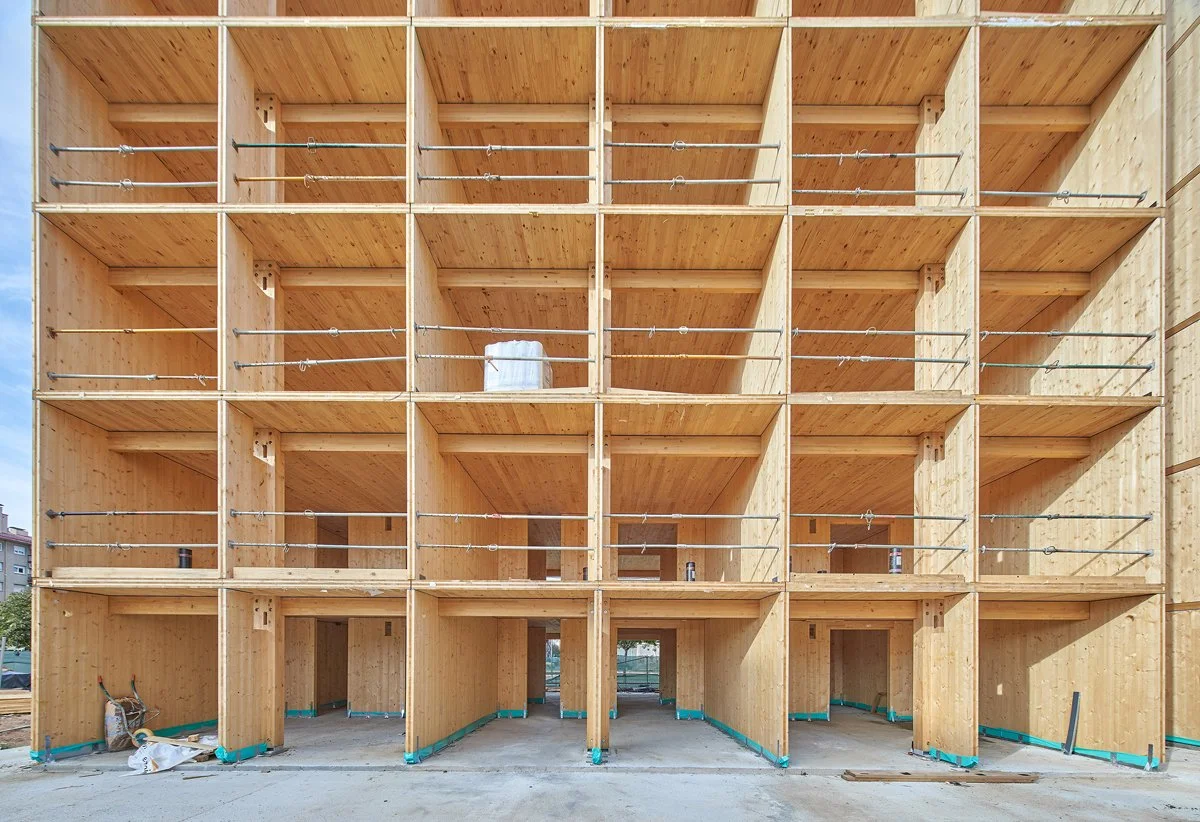
6X6 Block, 35 apartments in Girona, Spain (2016-2020) by BOSCH.CAPDEFERRO, Girona, Spain. Courtesy of BOSCH.CAPDEFERRO. Photo by José Hevia.
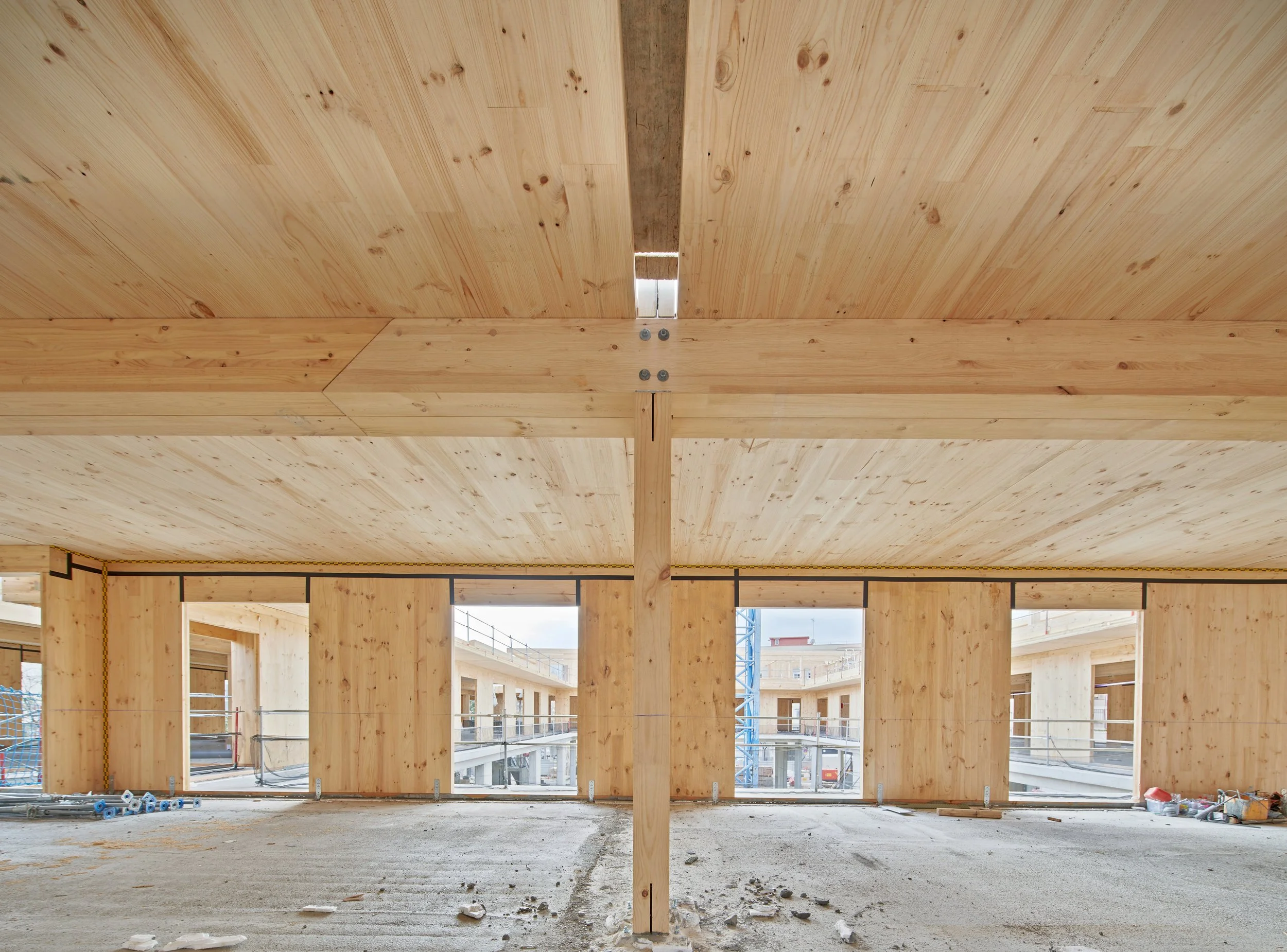
Modulus Matrix, 85 social housing in Cornellà, Spain (2020) by Peris + Toral Architecture. Spain. Courtesy of Peris + Toral. Photo by José Hevia.